
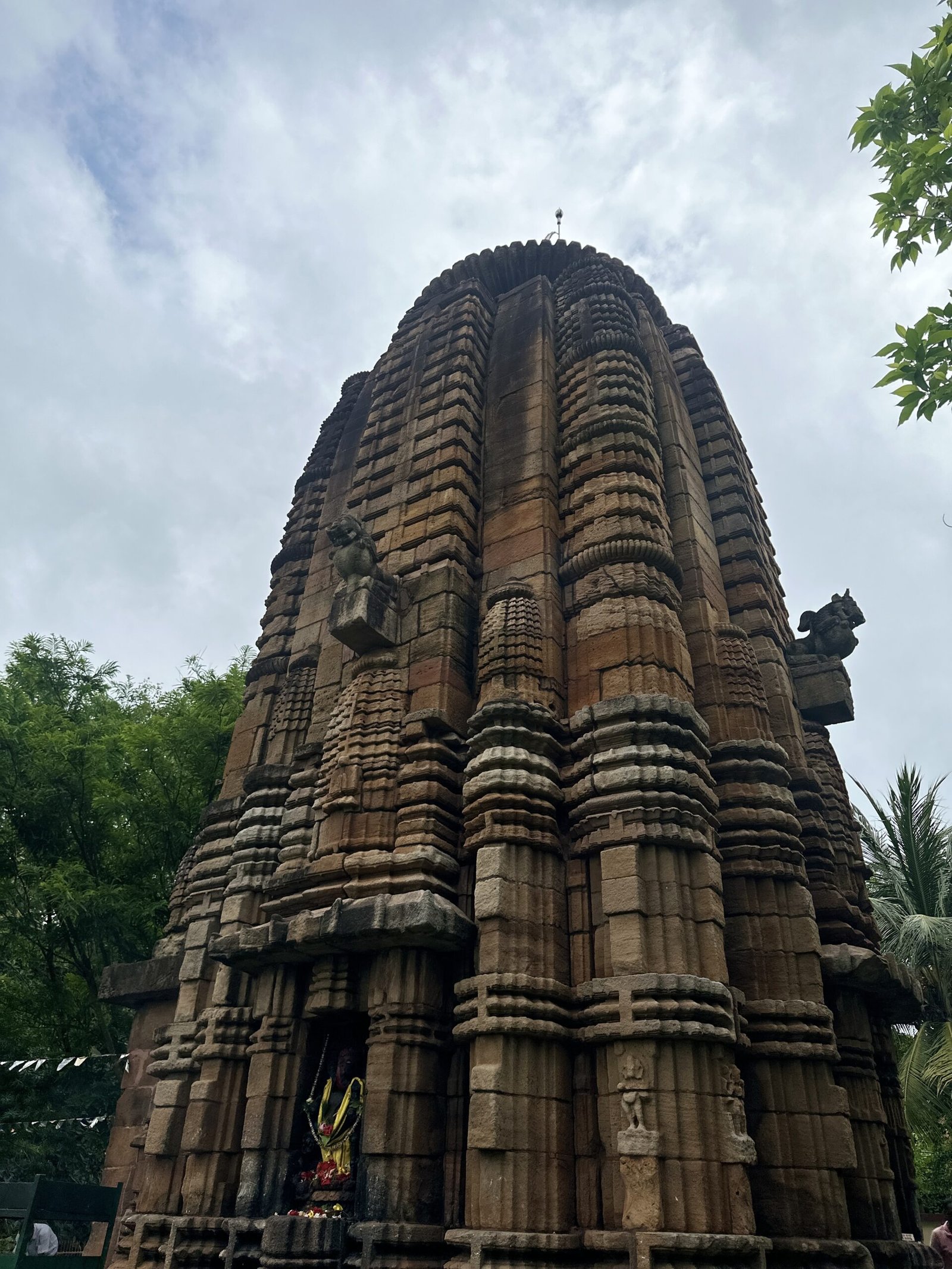
A less popular mandir of the Ekamra Kshetra is this 10th-century-old Shree Nageswara Temple. It is located 200 meters from Ravi Talkies on the western right bank of the Lingaraja West Canal. While temples like Ananta Vasudev Temple, Kedar Gouri Temple, and Mukteswara Temple are popular, the lesser-known ones like this temple, located in Nageswar Tangi, Bhubaneswar, are often overlooked. In this blog, we’re going to find out all about the Nageswar Mahadev mandir and the mysteries around its inception.
Origin story of Nageswar Tangi in Bhubaneswar
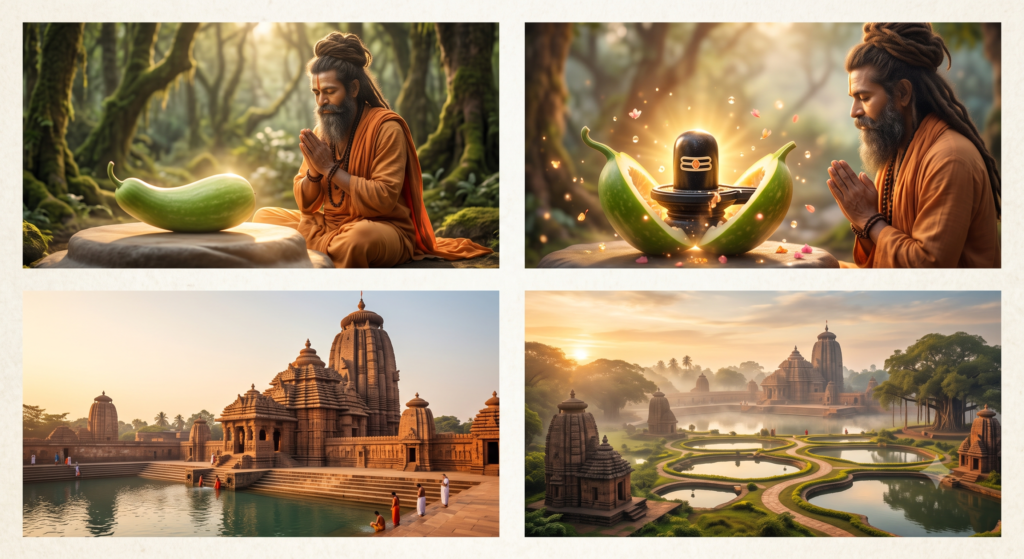
The temple is colloquially called Nabakeswar Mandir or Nageswar Mandir. When reading the name, you might imagine that this place is associated with the Nageshwar swaroop of Lord Shiva, in correlation with the Nageshwar Jyotirlinga of Gujarat. However, the official name of the temple came into being over time. Originally, it was called Alabukeswar Mahadev Mandir, and it has a mysterious story leading to its inception.
Centuries ago, there was a yogi who had received a bottle gourd as a donation. During those times, it was much more common for sages to sustain themselves only with the help of alms. Needless to say, the bottle gourd received through bhiksha was very dear to him. Still, in his bhaktibhav (devotional intent), he offered the vegetable to Lord Shiva, which pleased the Lord. Mystically, the bottle gourd turned into a swayambhu (self-born) Shivling. The current temple was built around the swayambhu during the 10th century under the rule of the Somavamsi Dynasty.
History and significance of Shree Nageswara Temple
The temple is a specimen of Kaligan architecture with a plain, tall elevating stone structure without extreme carvings. The garbagriha (innermost sanctum) houses the swayambhu lingam, while all four sides of the exterior are dedicated to other deities.
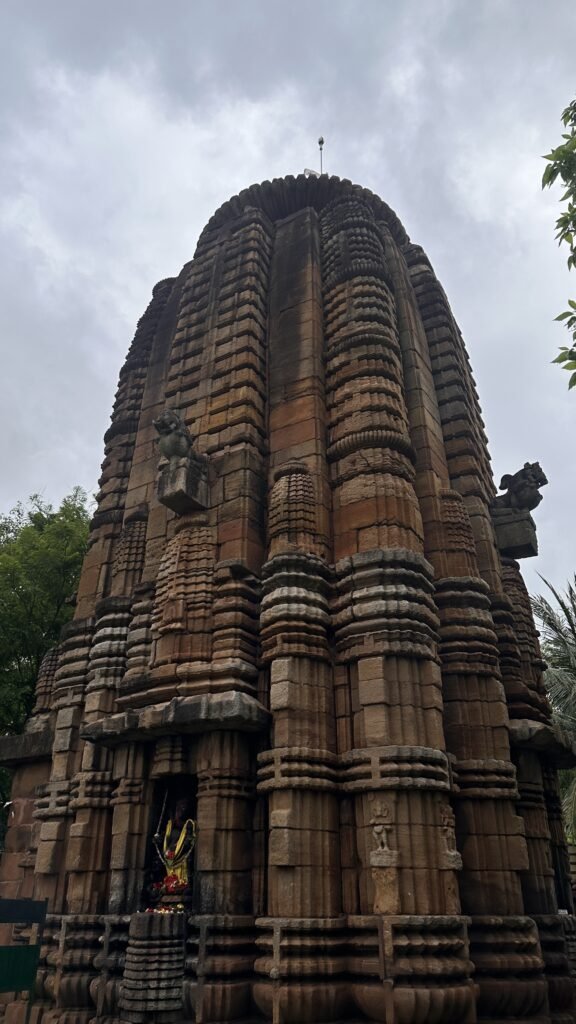
We have an idol of Lord Ganesha on one side, Lord Kartikeya on another side, and Chamunda Mata on another. The temple area has a greenscape adjacent to the idol of the Mother Goddess.
There is also a tiny temple adjacent to the main tower that is used as a storehouse of deities. You can see serpent deities, ornaments, clothes, lingams, and more kept there. Right beside the tiny temple is a sacred tulsi plant upheld by a stone pillar with the face of Lord Jagannath painted over it.
This Shiva temple also houses one of the Ashta Tirtha of the Lingaraj Temple. Ashta Tirthas denote the eight sacred water bodies, including Bindusagar Tank, Koti Tirtha, Devi Padhara, Papanasini, Ganga-Yamuna Kund, and Alabukeswar. Taking a holy dip in these sacred water bodies before seeking blessings from Lord Shiva is said to hold deep scriptural significance, as mentioned in scriptures such as the Skanda Purana and Ekamra Purana.
Navigating Shree Nageswara Temple in Bhubaneswar
I have been to Bhubaneswar six times thanks to my school friend who got married in the Odisha capital. She lives in Ravi Talkies and her locality is called Nageswar Tangi. The area got its name from the Shree Nageswara Temple, which is roughly 100 meters away from her home. So, every time I visit Bhubaneswar, this place is a few steps away for me.
When visiting temples across Bhubaneswar, you will find yourself navigating Ravi Talkies to visit the famous Rajarani Temple. That’s when you should also map out this temple, which is also roughly 800 meters from Mukteswara Temple. Once you are in Nageswar Tangi, ask anyone for directions, and they will lead you to the temple.
Best time to visit Nageswar Tangi temple in Bhubaneswar
If you’re in Bhubaneswar during special religious occasions associated with Lord Shiva, this is the best time to visit here. For example, during the holy month of Sawan, devotees line up to take a bath in the kund (sacred pool). Once done, they carry water in earthen pots to pour it over the Shiva Lingam, as it is an auspicious ritual. Since it is also the monsoon season, the water in the kund rises and the surrounding area blossoms in green, adding magic to the environment.
If you’re not visiting this place during a special occasion, I’d recommend coming over on a regular morning. Between 7 am and 9 am, you will find locals from the Nageswar Tangi area coming here for their morning prayers and rituals.
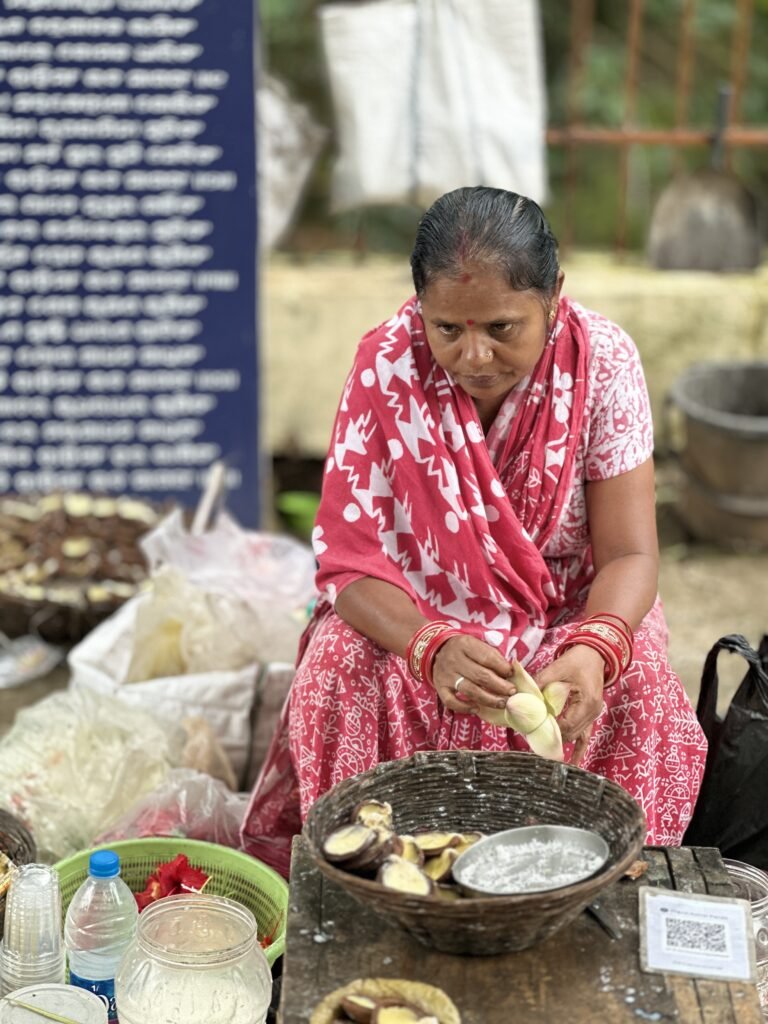
You will see a lady selling diyas after spreading ghee over them, and devotees lighting them up in a designated corner. You will also hear morning bells, people chanting mantras, and smell fragrant incense all around.
What’s special about this temple?
The fact that people in Tier II and III cities of India are more rooted in their culture and heritage compared to Tier I can be best explored from the footfall in their local temples. Starting your Ekamra heritage walk with less touristy temples makes you see right through what life in Bhubaneswar feels like.


0 Comments