
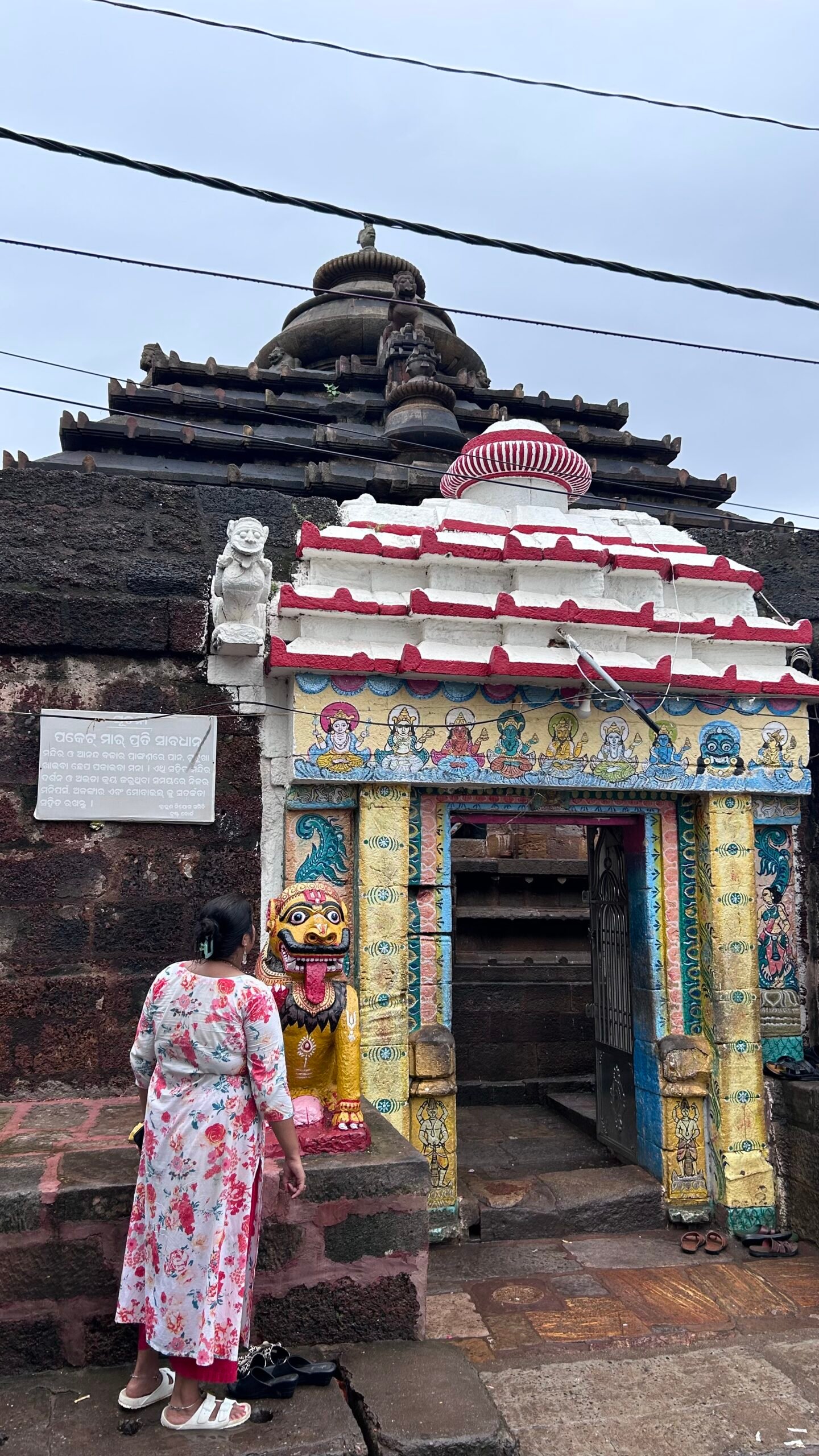
Anant Vasudeva temple in Bhubaneshwar is a 13th-century AD Vaishnavite shrine dedicated to Lord Vishnu. It is home to deities Ananta (Lord Balarama), Vasudev (Lord Krishna), and Goddess Shubhadra. Ananta Vasudev is one of the famous temples in Bhubaneswar, which draws visitors to relish Abhada (Mahaprasad) offered to the Lord and then distributed among devotees. The hustle and bustle of the temple kitchen is the highlight, and the ambiance is similar to that of Anand Bazaar in Jagannath Dham.
What makes Ananta Vasudev Temple special?
Bhubaneswar is called the Temple City of India because of the Ekamra Kshetra, the ancient Old Town full of temples. It features architectural heritage dating back to the 4th century AD. Most temples are dedicated to Lord Shiva, and the 11th-century AD Lingaraj Temple is the most revered of them all.
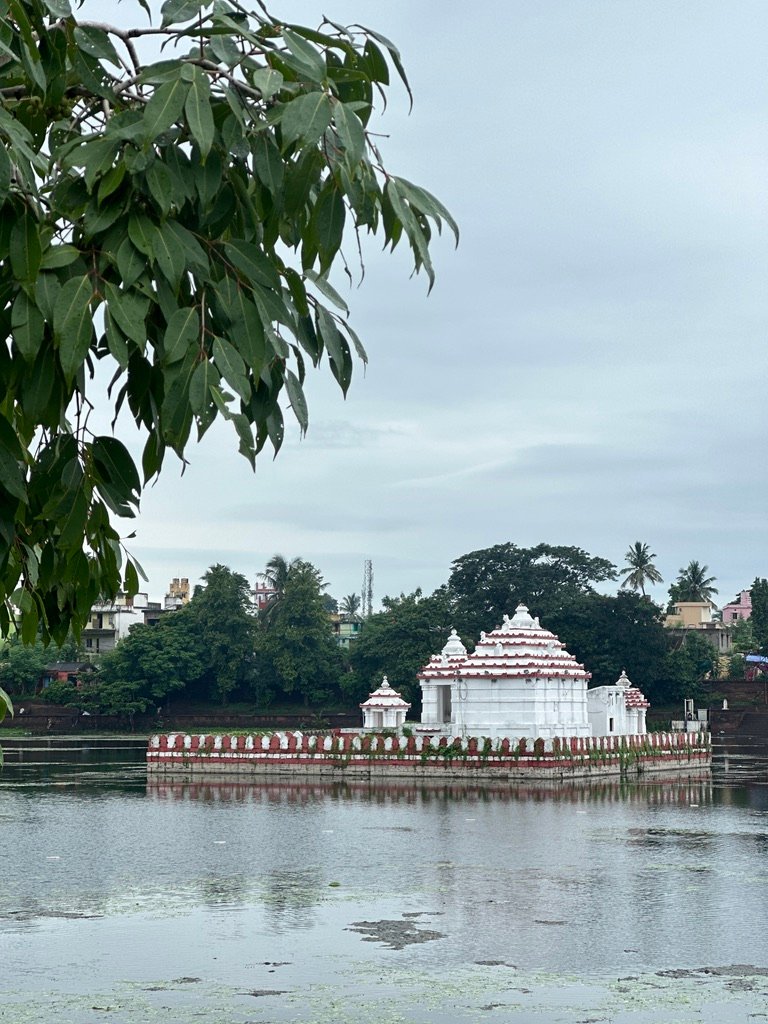
What is special about Ananta Vasudeva is that it is the only ancient Vishnu temple in the Old Town. It is located on the banks of Bindusagar Lake and features Kalinga-style architecture, similar to that of most temples in the Ekamra Khestra.
Direction of the temple
Unlike most Hindu temples that face east so that the first rays of the sun touch the sanctum, the Ananta Vasudev temple faces west. It is believed that the temple is located east of the Lingaraj temple. The Bindusagar Lake also faces westward and eastward to the Lingaraj temple.
Architecture of Ananta Vasudev Temple
Just when you’re about to enter the temple, you will find two lion gatekeepers staring at you with big eyes. You will find them across most temples in Odisha, as they act as a warning sign for devotees to leave their pride before entering.
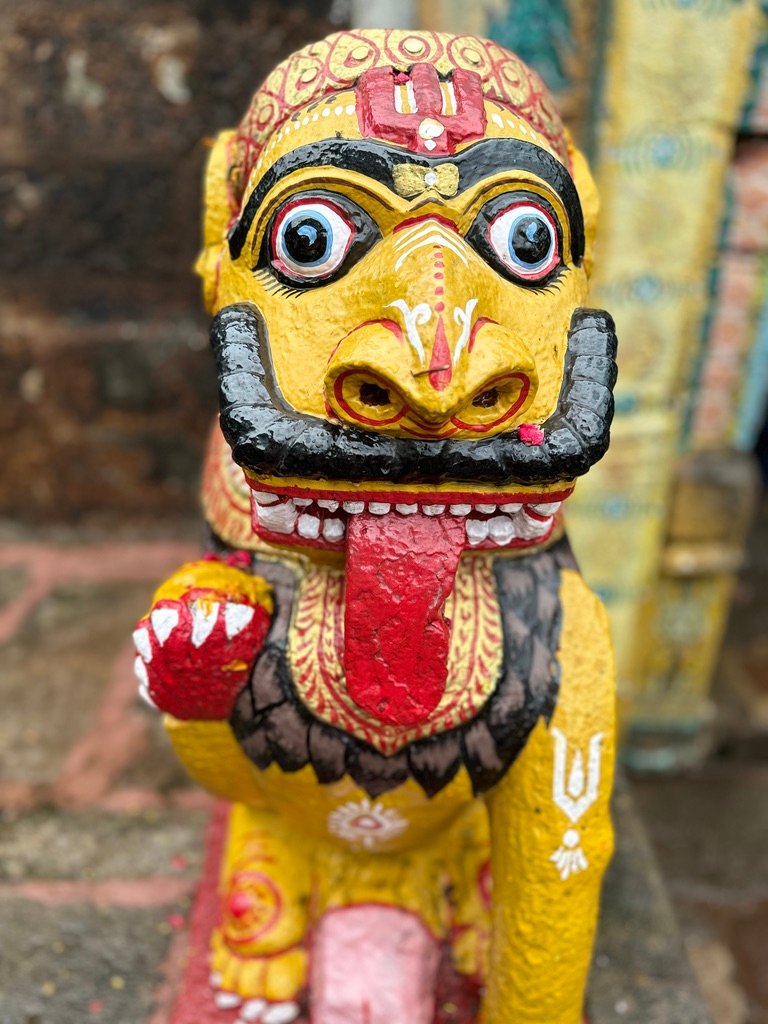
Unlike other ancient temples in the vicinity, the gate and the lions of the Ananta Vasudeva temple are painted in vibrant colors, while the rest of the temple retains the old charm.
The pillars and walls of the temple are engraved with figurines of Gods and Goddesses that depict stories from the Vaishnavite scriptures. There are long shikharas (spires) with similar carvings.
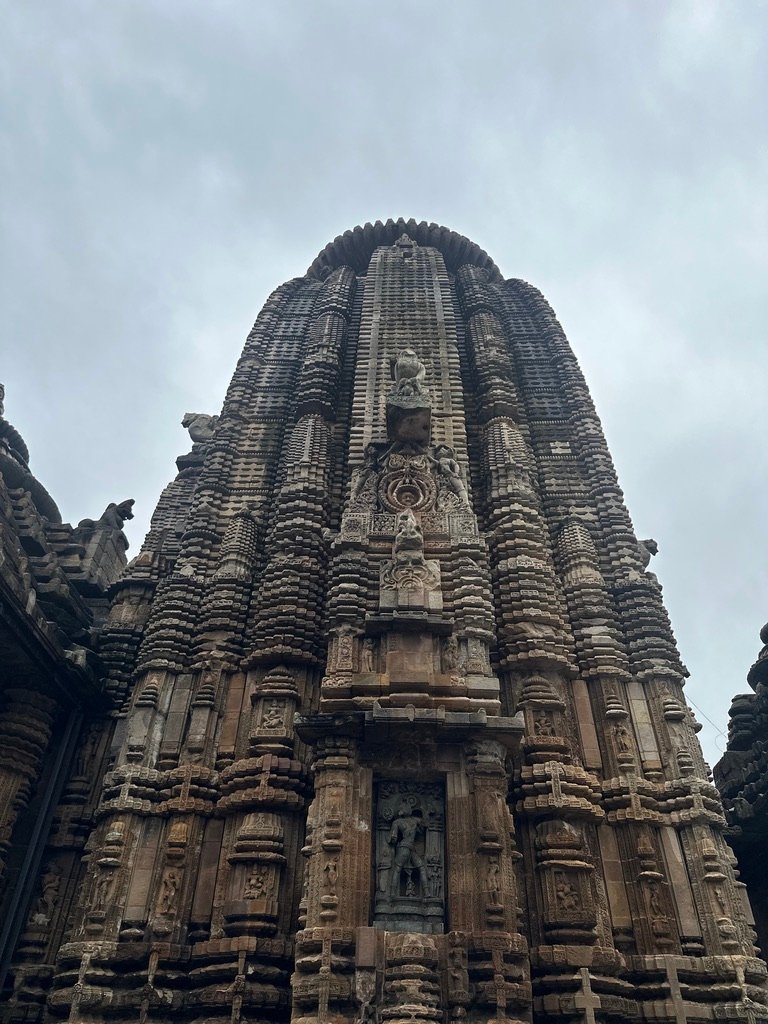
How the shrine is divided
The shrine has four parts: the inner sanctum, Jagamohana, Bhogamandapa, and Natamandira. Prayers and rituals are performed in Jagamohana, offerings are made to the divine in Bhogamandapa, while Natamandira witnesses celebrations during festivities.
Festivals celebrated in the temple
The Janmashtami celebration, which commemorates the birthday of Lord Krishna, is a major festival at the Ananta Vasudev temple. The temple is decorated with flowers and diyas as devotees chant prayers and offer milk, butter, and curd to the Lord.
History of Ananta Vasudeva Temple
Ananta Vasudev temple was built during the 13th century by Queen Chandrika Devi of the Chodaganga dynasty, also known as the Eastern Ganga dynasty. During the 17th century, when the Marathas ruled Kalinga, the temple was renovated to what it is today.
It is believed that Lord Vishnu was worshipped as an idol in this kshetra before the temple was built. Owing to the Sudarshan Chakra of Lord Vishnu, this place was referred to as Chakra Khestra. Similar to how Puri is called Sankha Kshetra owing to the shape of a conch.
Many people assume that the name Ananta Vasudev is another name of Lord Vishnu. However, Lord Ananta is the incarnation of Seshnaga (Lord Balaram) with the hood of Ananta Naga (Serpent) over his head. Vasudev is Lord Vishnu, while Goddess Subhadra is Jogomaya (Yogmaya).
The three deities are made of black granite stone, depicting standing postures. Lord Ananta stands with a seven-hooded serpent over his head, and Goddess Subhadra stands with a pot (kalash) and a lotus flower in her hands.
The depiction of Lord Vasudev is unique compared to how we find him in Vishnu avatar elsewhere. He holds a gada (mace) in his top-right hand and a Sudarsan Chakra (wheel) in his bottom-left hand. Interestingly, Lord Vishnu holds the chakra in his top right hand in most temples. But here, owing to the story of the Mahabharata, where Lord Krishna had declared that He would not use any weapons in the war, he holds the chakra in His left hand, facing downward.
Culinary delight of Ananta Vasudev temple
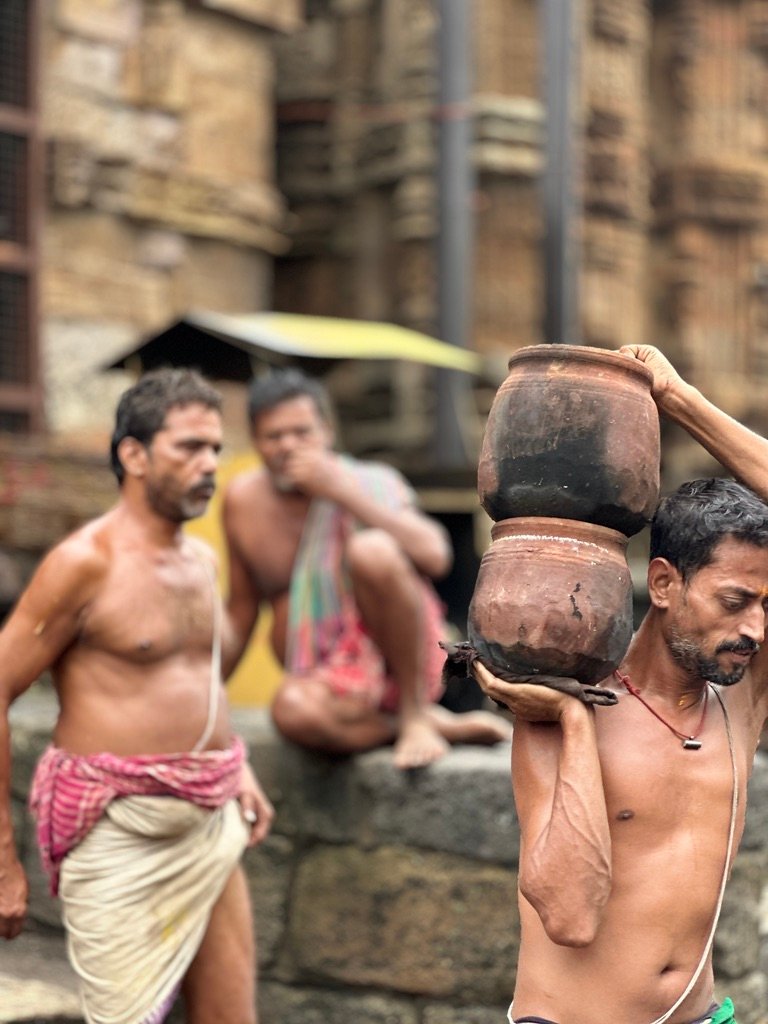
The most interesting experience at the Ananta Vasudev temple is the constant rush of seveyaks (servers devoted to the Lord) carrying earthen pots on their shoulders from one place to another.
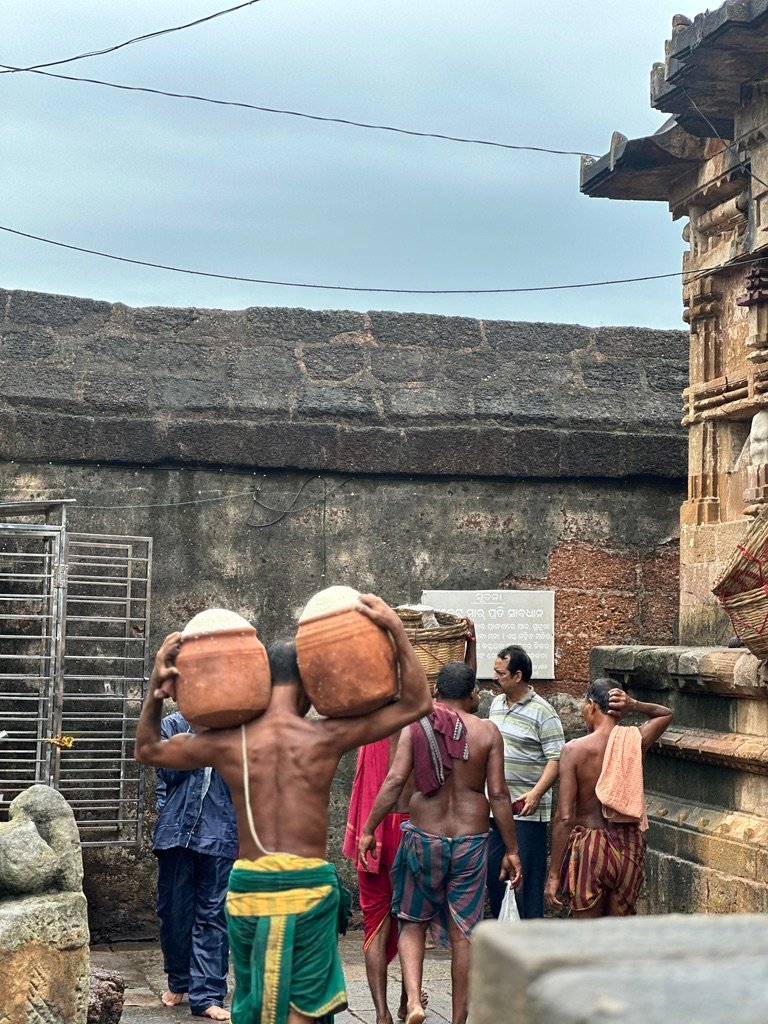
As soon as you enter the Bhogamandapa, you will see smoke emitting from the thatched roof, blending with the tempting aroma of Abhada. When looking to have Puri-style Mahaprasad in Bhubaneswar, this is where to come.
Abhada is a sacred vegetarian meal made with satvik ingredients and devoid of onion and garlic. Tomatoes and potatoes that were not originally grown in India are also not a part of these recipes. The food includes steamed rice, Dalma (lentils with vegetables), and Mahura (mixed vegetable curry).
Making Abhada involves an interesting cooking process. Food is prepared in fresh earthen pots over earthen stoves using firewood. The earthen pots are placed on top of each other so that the recipes come to a boil. Interestingly, the one right on top gets cooked first, while the ones below get cooked one after another.
After preparation, the food is sold at the Bhoga Bazaar, where thousands of devotees sit and relish prasad every day. All food consumed here is first offered to the deities (turning it into prasad) and then distributed among devotees. The Bhoga Bazaar is an adjoining space within the temple premises.
The ambiance is similar to that of Anand Bazaar in Jagannath Temple in Puri, but in a smaller space. Locals who cannot frequently visit Puri Dham relish the Mahaprasad of the Ananta Vasudeva temple whenever they like.
Things to note when visiting Ananta Vasudev temple
Here are some things to keep in mind before visiting Ananta Vasudev temple in Bhubaneswar:
- Temple timings: the shrine is open to visitors between 6 am and 8 pm on all days of the week.
- How to reach: Uber, Ola, and Odisha Yatri cab apps help you book autos or cabs to reach the temple. You can also avail of the local autos available around the old town.
- Shoes to be kept outside: there are sevayaks that help you keep your shoes outside in a designated area, so that you can leave them and enter the holy sanctum. You can collect the shoes from the same spot after you leave the temple.
- Photography permits: you can click photos and videos of the exterior part of the temple and the Bhogomandapa. Photography is not allowed inside the sanctum.
- Food cost: you can choose which items you want to buy, including rice, dal, sweet, mixed veggies, and more. The cost is calculated based on how much you order and amounts to roughly 200-300 INR per person.
Out and around Ananta Vasudev temple
While exploring prominent temples like Mukteswara temple, Parashurama temple, and Kedargouri temple, don’t miss out on lesser-known places like the Ekamra Van. Spend some quiet time by the Bindusagar Lake as you watch sevayaks carry earthen pots to transfer food to vehicles for distribution as ordered.

0 Comments