
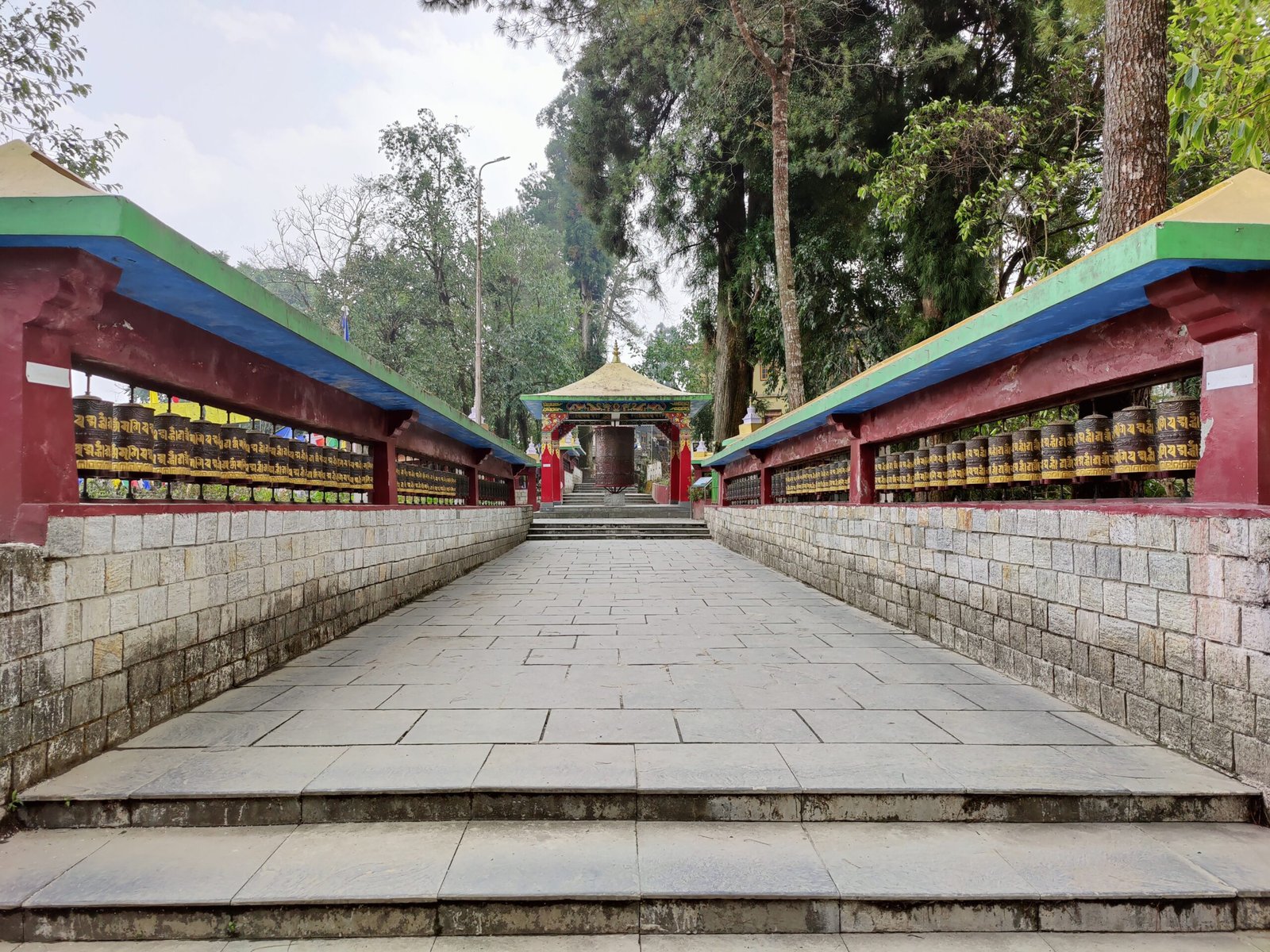
While the most attractive part about Gangtok is how the winding mountainous roads have spectacular views of Mount Kanchenjunga, your chances of experiencing clear skies are pure luck. Aside from chilly winters from mid-December to mid-January, the city experiences precipitation and fog year-round. But don’t let that change your travel plans, because the places to visit in Gangtok go beyond chasing snow-capped mountains. The capital city of Sikkim is home to Buddhist monasteries, flower exhibits, mighty waterfalls, and it has a lively city vibe thanks to MG Marg.
Key Takeaway
You can explore the top 10 places to visit in Gangtok in one day if you book a private car and start your journey early. Your itinerary for spending one day in Gangtok includes:
- Tsuk La Khang Monastery (Chogyal Palace)
- Do Drul Chorten
- Tibetology Museum
- Flower Exhibition Centre
- Enchey Monastery
- Ganesh Tok Gangtok
- Hanuman Tok Gangtok
- Gonjang Monastery
- Bakthang waterfalls
- MR Marg
Taxis are available around MG Marg and are mostly Wagon R cars that can accommodate 3-4 people. The charges for booking cabs for a day range between 2,500 INR and 3,000 INR.
Places to visit in Gangtok
Sikkim roughly gets 11 hours of sunlight between 6:30 am and 5:30 pm. So, only if you start your day trip early can you explore all the places on this list before sunset.
I prebooked a driver from MG Marg the night before, and he picked us up at 8 am from our hotel, Muscatel Yavachi. You can also prebook a driver from your hotel if that feels more convenient. But they are likely to charge more.
Here is the chronological itinerary for the top 10 places to visit in Gangtok in one day:
1. Tsuk La Khang Monastery (Chogyal Palace)
Tsuk La Khang Monastery, located 2.1 km from MG Marg, is the first place to visit in Gangtok to understand its history.
Sikkim was ruled by the Chogyal dynasty until 1975, when it merged with India and became part of a democracy. The Chogyal monastery is an imperial gompa that was built beside the royal residence. Today, it serves as a Buddhist learning centre and a hostel for monks, and is open to tourism.
Surprisingly, the itinerary set by local drivers doesn’t include this monastery because it doesn’t fall in their usual route. But you can’t miss coming here, even if it takes 45 to 60 minutes to explore it fully.
Entry fee: free
Timings: 6 am to 4 pm
2. Do Drul Chorten
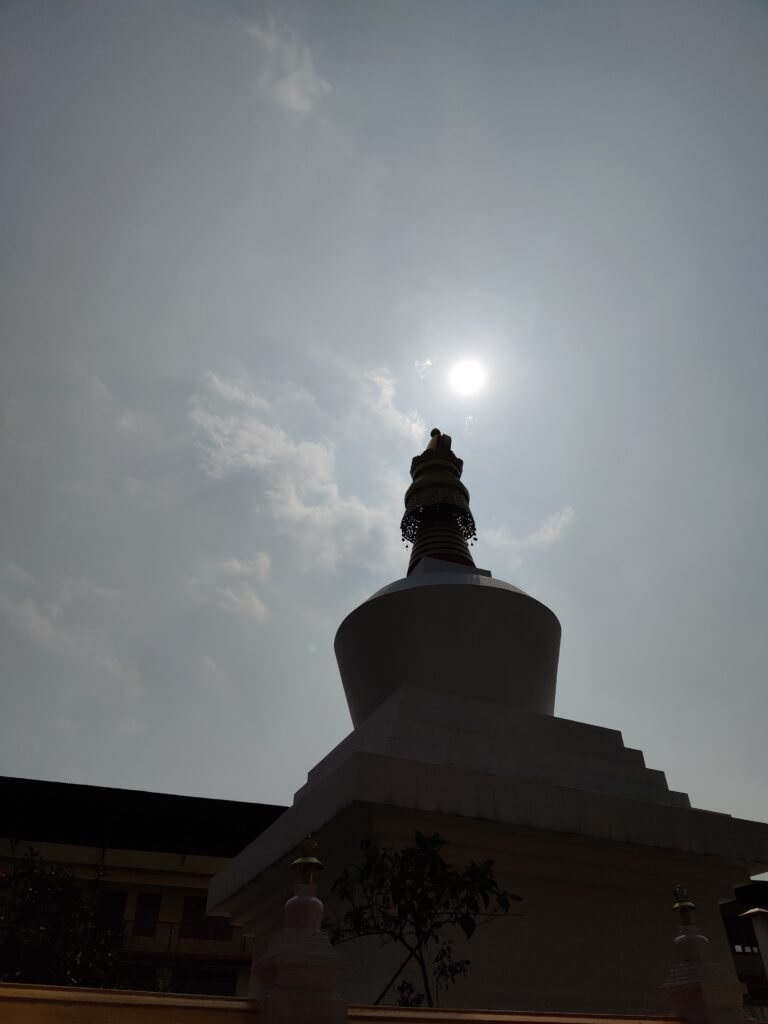
Do Drul Chorten is a stupa that was established in 1946 by Guru Trulshik Rinpoche, the teacher of the 14th Dalai Lama. He was the head of Nyingma, the oldest Tibetan Buddhism school. The white dome with a golden spire atop is dedicated to Vajrakilaya, a deity of Vajrayana Buddhism.
The stupa has 108 Mani Lhakor (prayer wheels). It also has two statues of Guru Trulshik Rinpoche. This place houses a monastery and is an educational institution for monks.
There is an elevation of about 100 meters to walk to reach the stupa. It is exactly how you’d find one of the finest bird’s eye views of the Kanchenjunga.
Entry fee: free
Timings: 9 am to 5 pm
3. Tibetology Museum
The Namgyal Institute of Tibetology is located 250 meters away from Do Drul Chorten and comprises a museum, a research center, and two libraries.
The foundation of this establishment was laid by the 14th Dalai Lama in 1957, and it was opened to the public in 1958. The intention behind this institute was to preserve historical texts, literature, and science to transcend Buddhist religious teachings from Tibet.
The museum is a specimen of Sikkimese architecture, but mesmerizes you more as you explore the gallery. Statues, thangkas, xylographs, instruments, texts, and many more treasures are a part of its collection.
CCTV surveillance is in place at all times, and photography is strictly prohibited on museum premises. There is a handicraft and jewelry shop that could interest you for souvenir shopping.
Entry fee: INR 25 per person
Timings: 10 am to 4 pm
4. Flower Exhibition Centre
Sikkim is beautiful during spring because you find the most exotic flowers you don’t see anywhere else in India. But if you’re not visiting during spring or early summer, the Flower Exhibition Centre will give you glimpses of its glory.
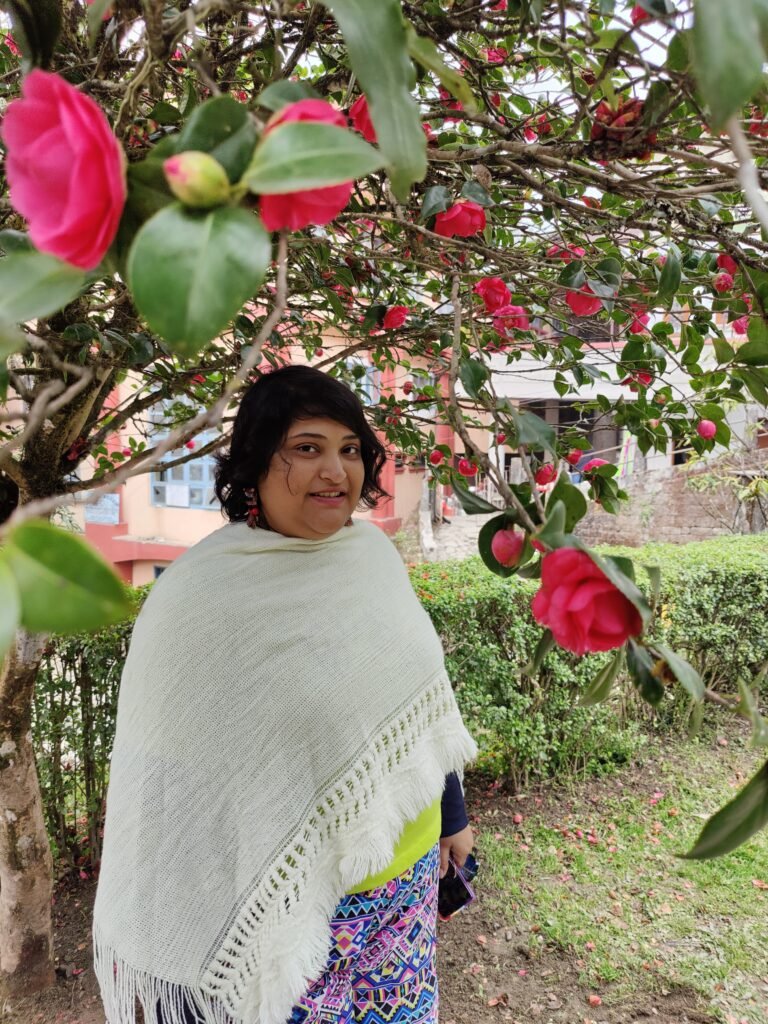
Spread across a beautifully landscaped garden, I found out that lilies and orchids could have different shades. Acquainted myself with Surfinia and Primula Obconica that I’d never seen before. Also, posed pretty under a rose tree that was blooming in pink during the receding winters.
Every May, this greenhouse flower exhibition showcases flowers like Azaleas, Anthuriums, Celosia, Chrysanthemums, Poppies, Tulips, and, of course, the best of them all – the Rhododendrons.
Entry fee: INR 20 per person
Timings: 9 am to 5:15 pm
5. Enchey Monastery
The literal meaning of ‘Enchey’ is solitary, and the monastery is tucked away on a hilltop located in North-East Gangtok. It offers unmatched views of the Kanchenjunga range and is a revered place for the Nyingmapa order of the Vajrayana school of Buddhism.
Enchey Monastery has an interesting story because this land was selected by Lama Druptob Karpo, a tantric who had flying powers. It is believed that he flew from Maenam Hill in South Sikkim and came to this place to build a hermitage. Although the monastery is over 200 years old, what we see today was established in 1909 under the reign of Sidkeong Tulku.
Entry fee: free
Timings: 9 am to 5 pm
6. Ganesh Tok Gangtok
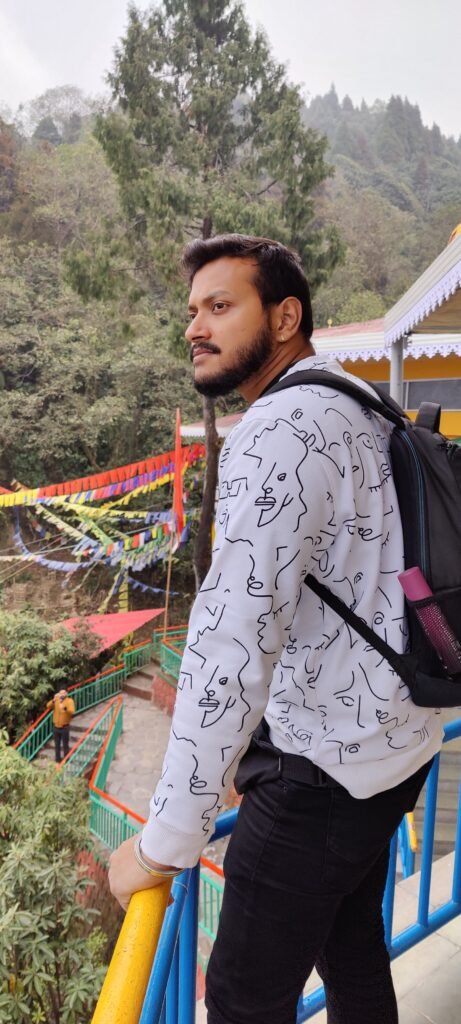
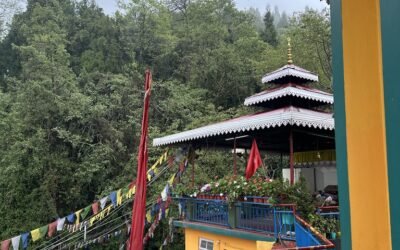
‘Tok’ is referred to as temple in the Sikkimese local language, and Ganesh Tok is dedicated to Lord Ganesh. This place is close to Tashi viewpoint, making it one of the most beautiful vantage points to gaze at the Kanchenjunga range while enjoying a bird’s-eye view of the town.
Built in 1953, the vibrant yellow temple houses a lovely white marble sculpted idol of Lord Ganesh. The inner sanctum is a tiny place that can hardly accommodate one person at a time and devotees visit one by one taking the staircase.
The balcony outside the sanctum draws attention for its view. When you add the fluttering of prayer flags and the rhythms of prayer bells, the divinity of the place uplifts your spirit.
Entry fee: free
Timings: 9 am to 5 pm
7. Hanuman Tok Gangtok
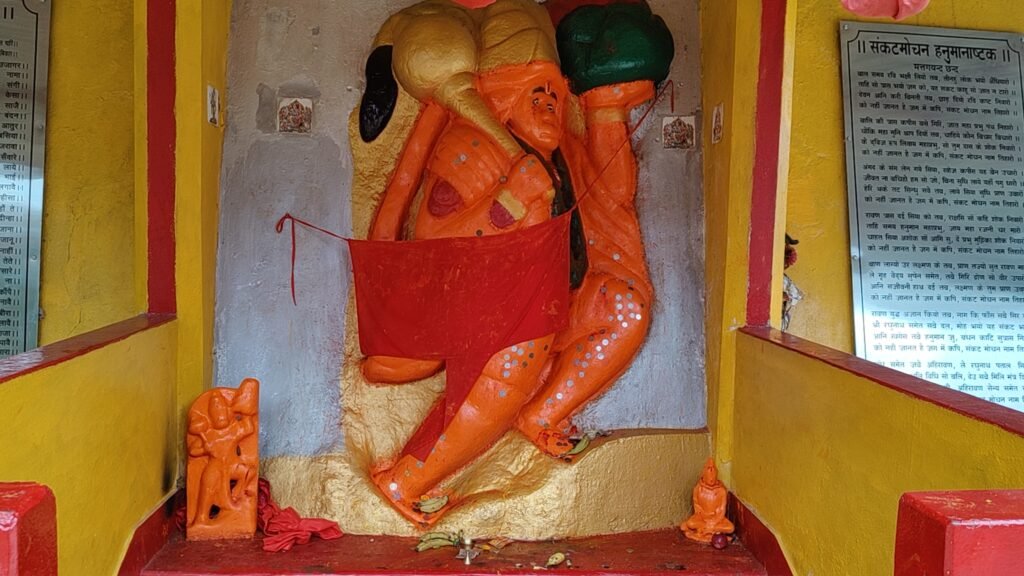
Hanuman Tok is a temple dedicated to Lord Hanuman, and is another temple complex that serves as a vantage point for the eastern Himalayan range. The temple was built at the same place where it is believed Lord Hanuman rested while carrying Sanjeevani Buti (medicinal herb) to Sri Lanka to save Laxman’s life.
The main temple houses a 10-foot-tall idol of Lord Hanuman in a flying posture, holding the Dronagiri mountain. But like most Hanuman temple complexes, you also find a temple with idols of Lord Ram, Sita, and Laxman. The temple also has idols of Lord Shiva, Goddess Durga, and Goddess Kali.
Entry fee: free
Timings: 5 am to 7 pm
8. Gonjang Monastery
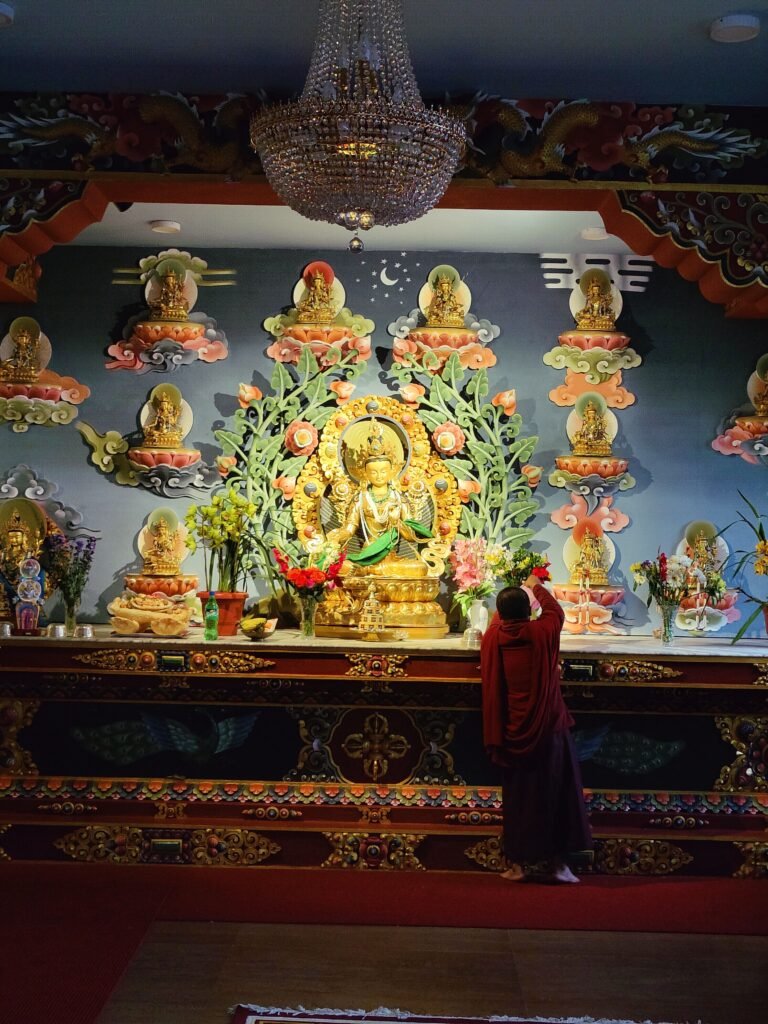
The interesting thing about this monastery is that it was built by someone who had known had incarnated before. H.E. Tingkye Gonjang Rimpoche founded the Gonjang Monastery in 1981 and is known as the manifestation of the Nyingmapa Terton Yolmo Terton Ngakchang Shakya Zangpo.
The monastery follows the Jangter tradition of the Nyingma school, another Tibetan Buddhist sect. Here, young monks learn English and Tibetan and go through comparative studies of different philosophies of life.
On my visit here, we could not enter the monastery as the doors were closed by the time we reached. But we did catch glimpses of a massive Buddha statue from outside. The tallest prayer flag of Gangtok lies on the premises, and it is magnificent to look at it as it gushes against the wind.
Entry fee: free
Timing: 7 am to 5 pm
9. Bakthang waterfalls
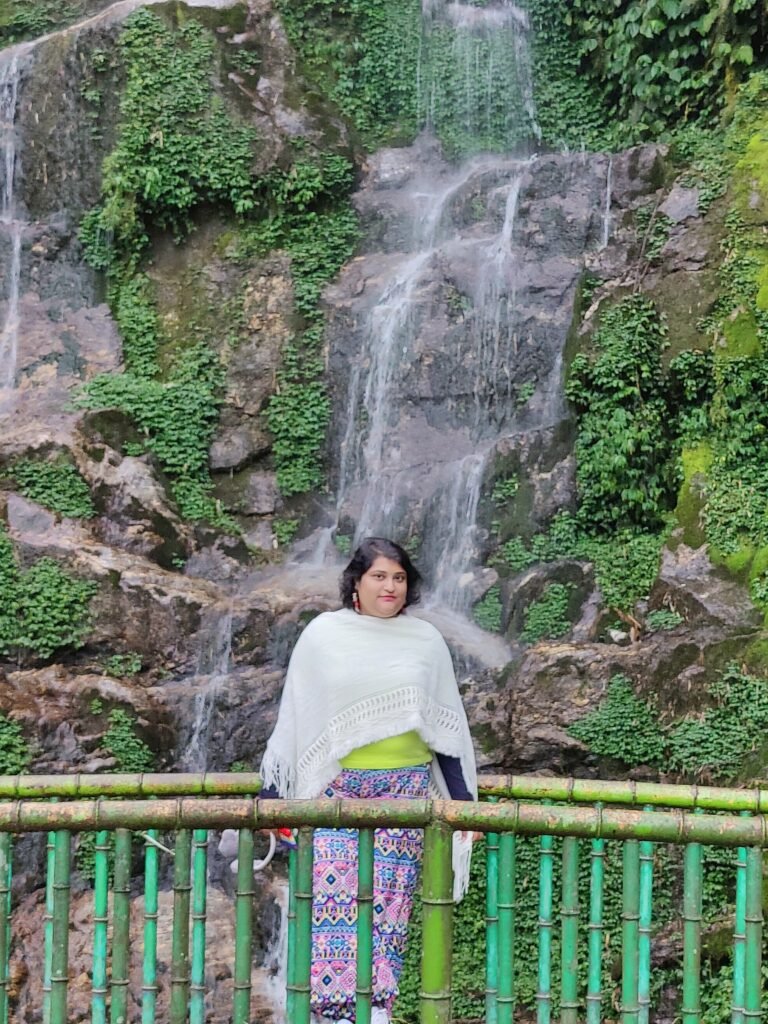
‘Bak’ means forest and ‘Thang’ means meadow, representing the natural spring water fed by the Ratey Chu River. Right before sunset, make way to the serene waterfalls located at Swastik as you see the waters cascade down a gigantic rock. There is a pool below and a tiny bridge over it where tourists stop to photograph and get a close view.
Entry fee: free
Timing: 5 am to 6 pm (visit any time between sunrise and sunset)
10. MG Marg
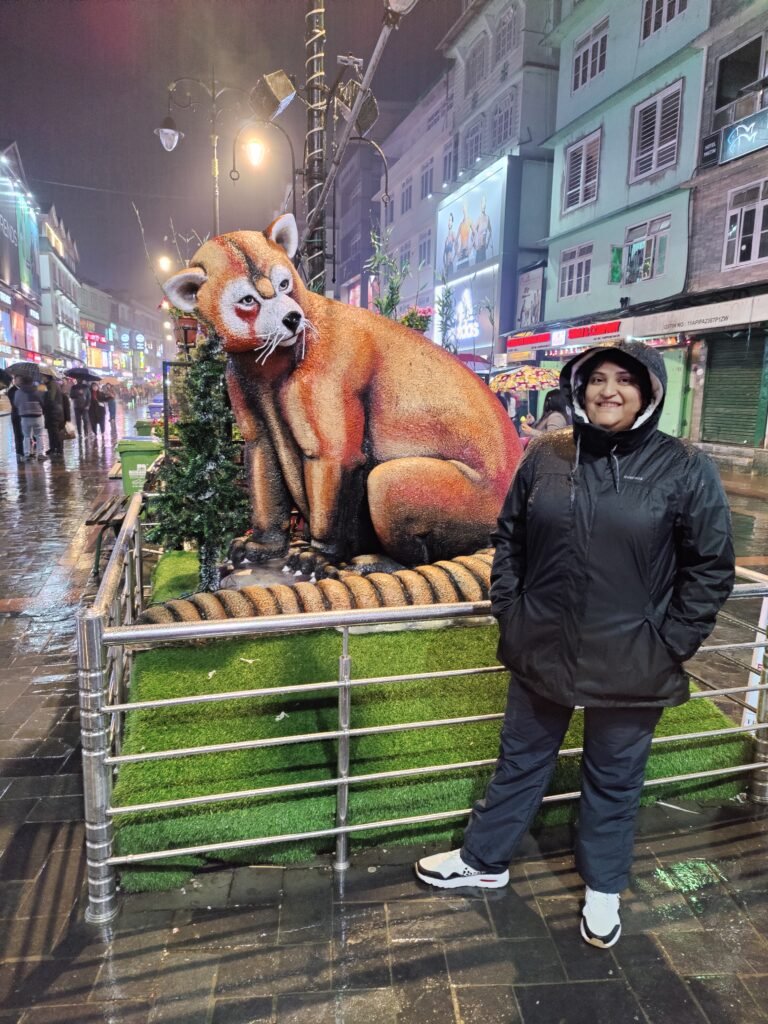
MG Marg is where you circle back at the end of the day to spend an evening of shopping and eating Gangtok’s delights. While the rest of Gangtok winds up by 8 pm, this lively market stays up late.
The broad street is a traffic-free zone lined with restaurants serving food across all cuisines. But the best restaurants in MG Marg are those that serve local food, like Taste of Tibet and The Dragon Wok.
Simply strolling through the place and taking photographs with the red panda statue makes you feel joyful, especially because locals encounters are friendly and welcoming. You can shop for souvenirs, gamble at casinos, buy the cheapest alcohol, or simply dine as you see people go by.
Things to keep in mind
- Start your day early to cover all the top places to visit in Gangtok
- Alter the chronology of the itinerary based on opening and closing timings if need be
- Have lunch after visiting Ganesh Tok, as there are tiny food outlets serving vegetarian food like momo, aloo paratha, Maggi, and more
- Not all places will have cafeterias or food available, so carrying snacks would come handy if you feel hungry on the way
- Wear comfortable shoes that help you trek up and down elevated staircases at Ganesh Tok, Hanuman Tok, and Enchey Monastery
- Carry an umbrella to have yourself covered when skies aren’t clear
- Remember to take the contact number of your driver to locate them quickly after you’re done visiting each place
Frequently Asked Questions
What is the best time to visit Gangtok?
The best time to visit Gangtok is between March and May for blossoms, and between October and January for clear skies to witness the eastern Himalayan range.
Is 2 days enough to explore Gangtok?
Yes, 2 days are enough to explore Gangtok city and nearby attractions such as Rumtek, Banjhakri Falls, and Ranka Monastery.
Which month is the best for Gangtok?
The best time to visit Gangtok is between March and May because the state brightens up with vibrant flowers, the cold is bearable, and if you’re lucky, you will also find clear skies.

0 Comments